
Franklin Thread by Jeff Richards in Philadelphia
About
-
Work
Franklin Thread -
Artist
Jeff Richards -
City
Philadelphia -
Country
United States -
Status
Completed and on view (temporary) -
Year
2026 -
Materials
Living flax, retted flax, flaxcrete (flax shive and lime), flax twine, recycled plastic rods, gravel, metal edging, spray paint -
Commissioned by
Association for Public Art, for Art on the Parkway, with the Parkway Council and Philadelphia Parks and Recreation -
Photography
Daniel Jackson for Embassy: Interactive
Links
A temporary installation in Philadelphia’s Maja Park, on view until October 2026, where architect Jeff Richards has built a low wall from flaxcrete, a flax-and-lime material he developed with his students.
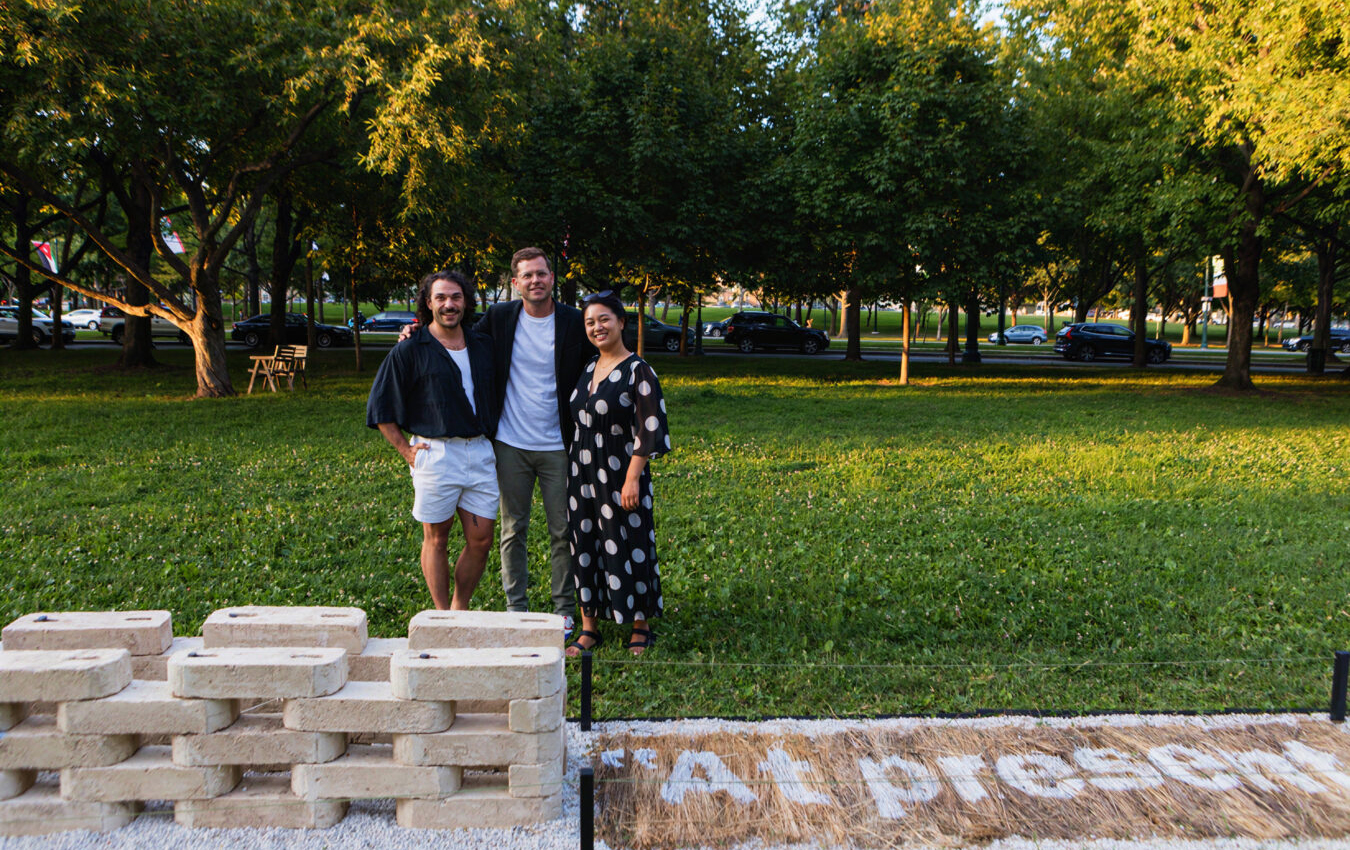
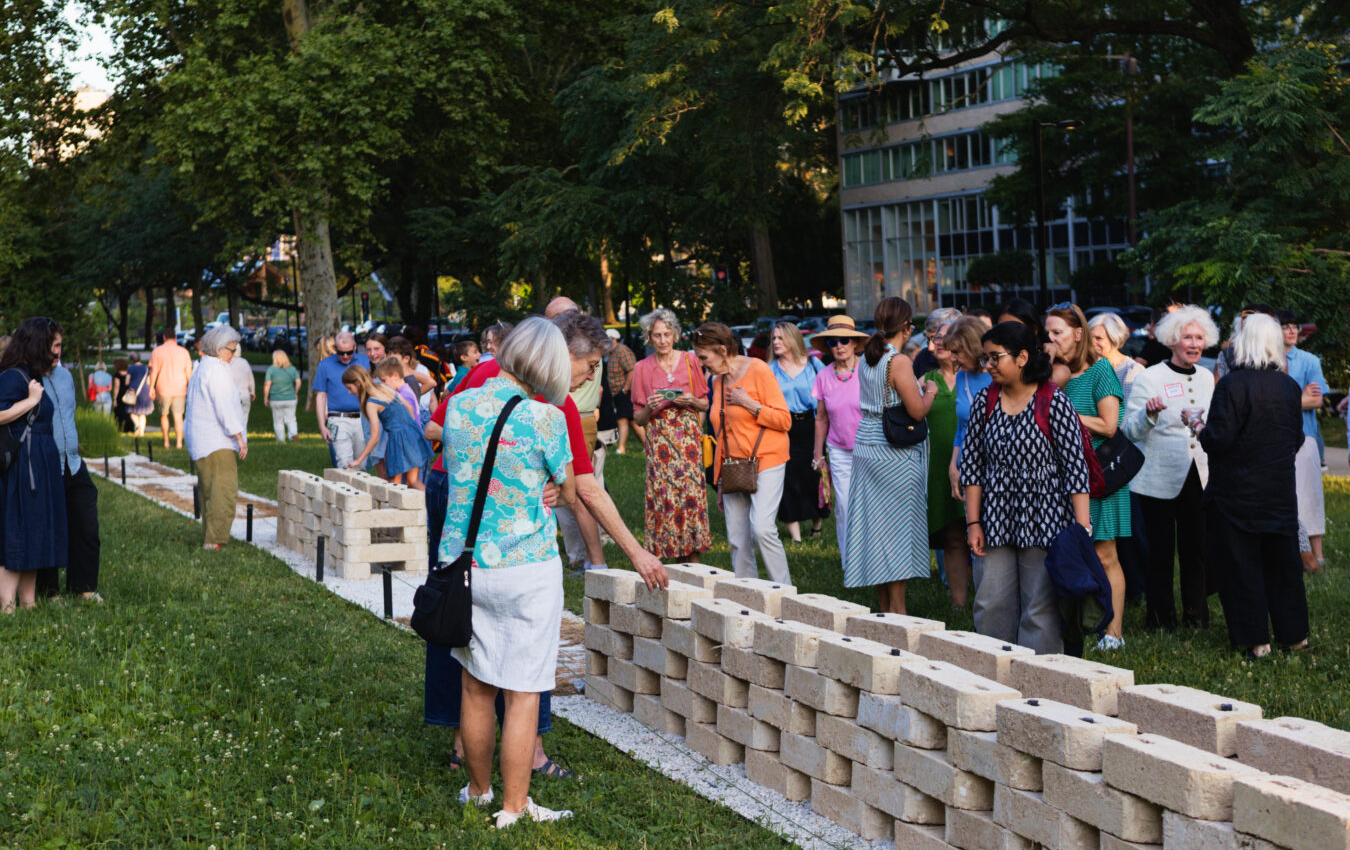
Richards cast 250 blocks for the wall, each made from flax shive, the woody core of the stem left behind when flax is stripped for linen, bound with a lime binder. The result is a masonry unit closer to hempcrete than to poured concrete: pale, coarse, and light in the hand. Stacked into a low run beside a bed of white gravel, the blocks carry drilled holes plugged with short recycled plastic rods, with a shallow channel running the length of the wall’s center.
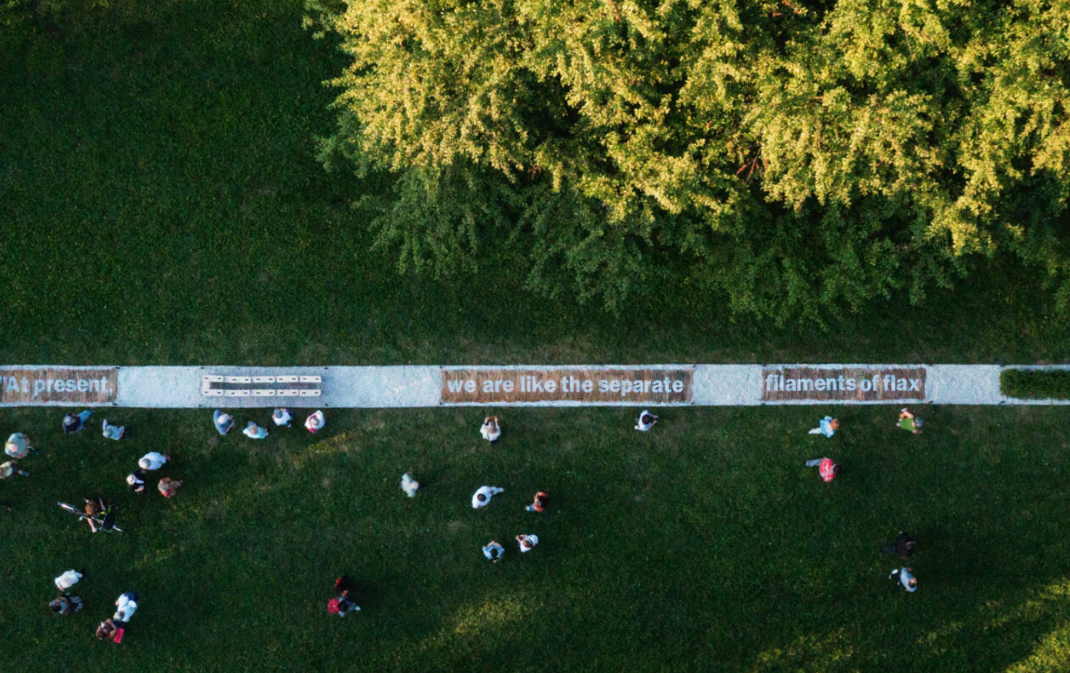
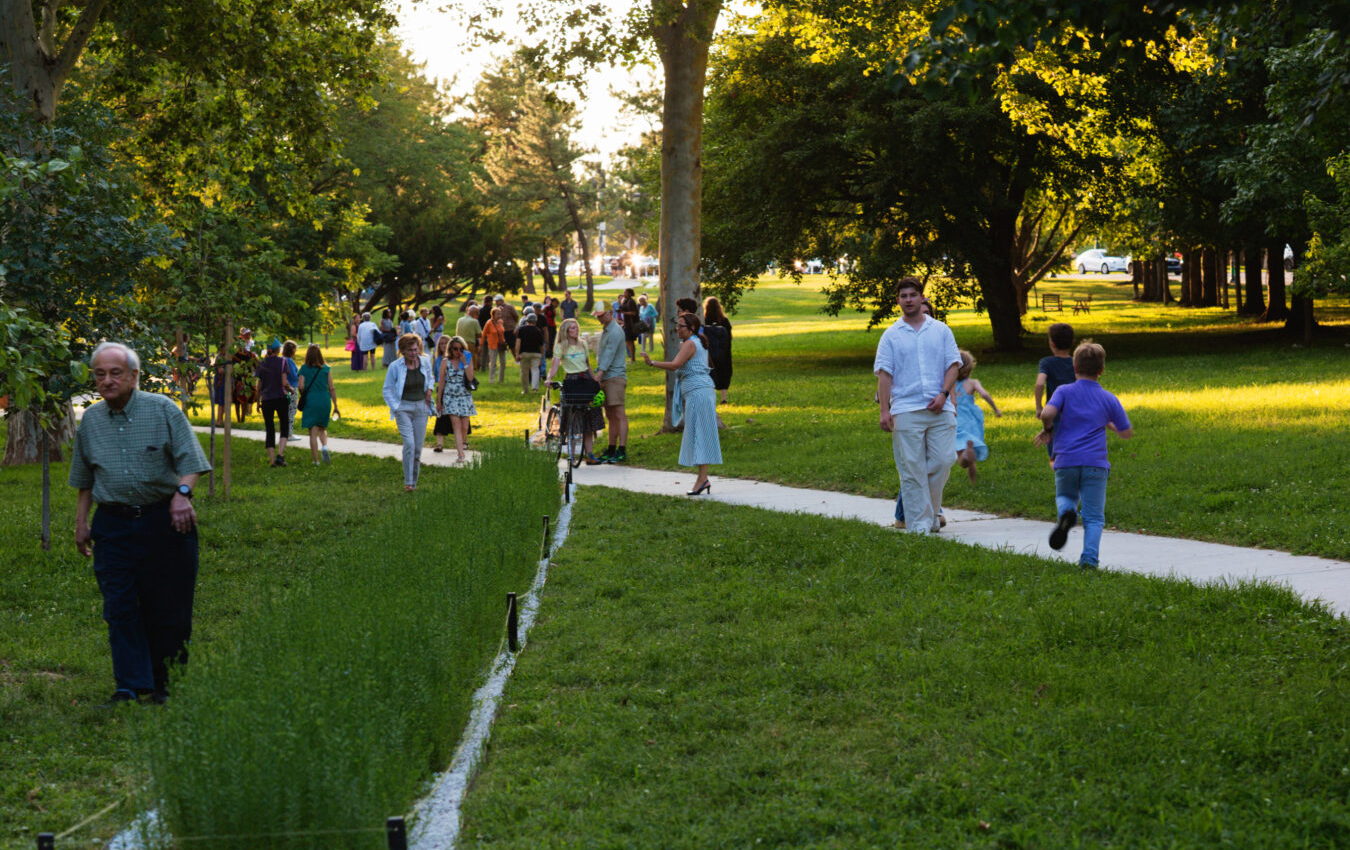
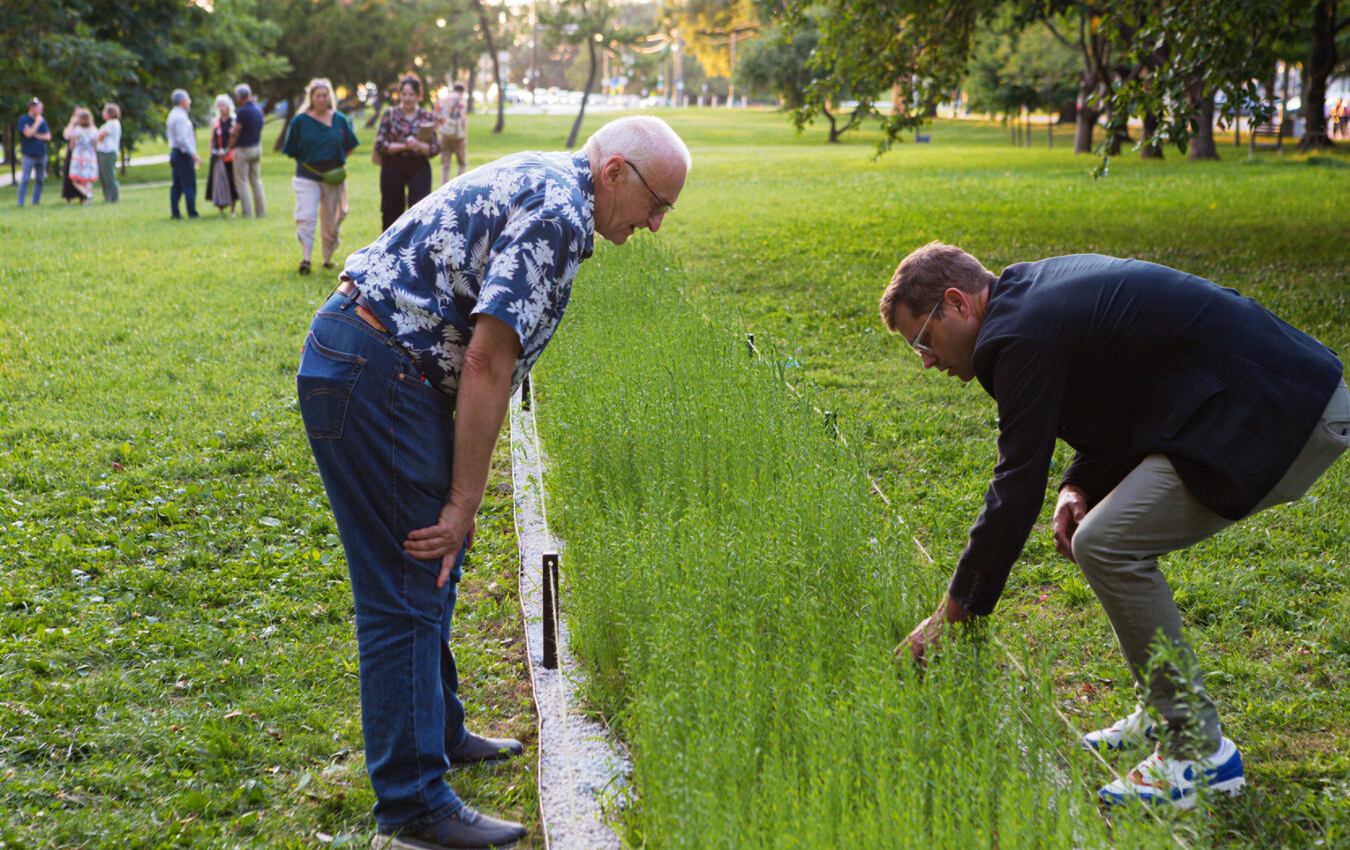
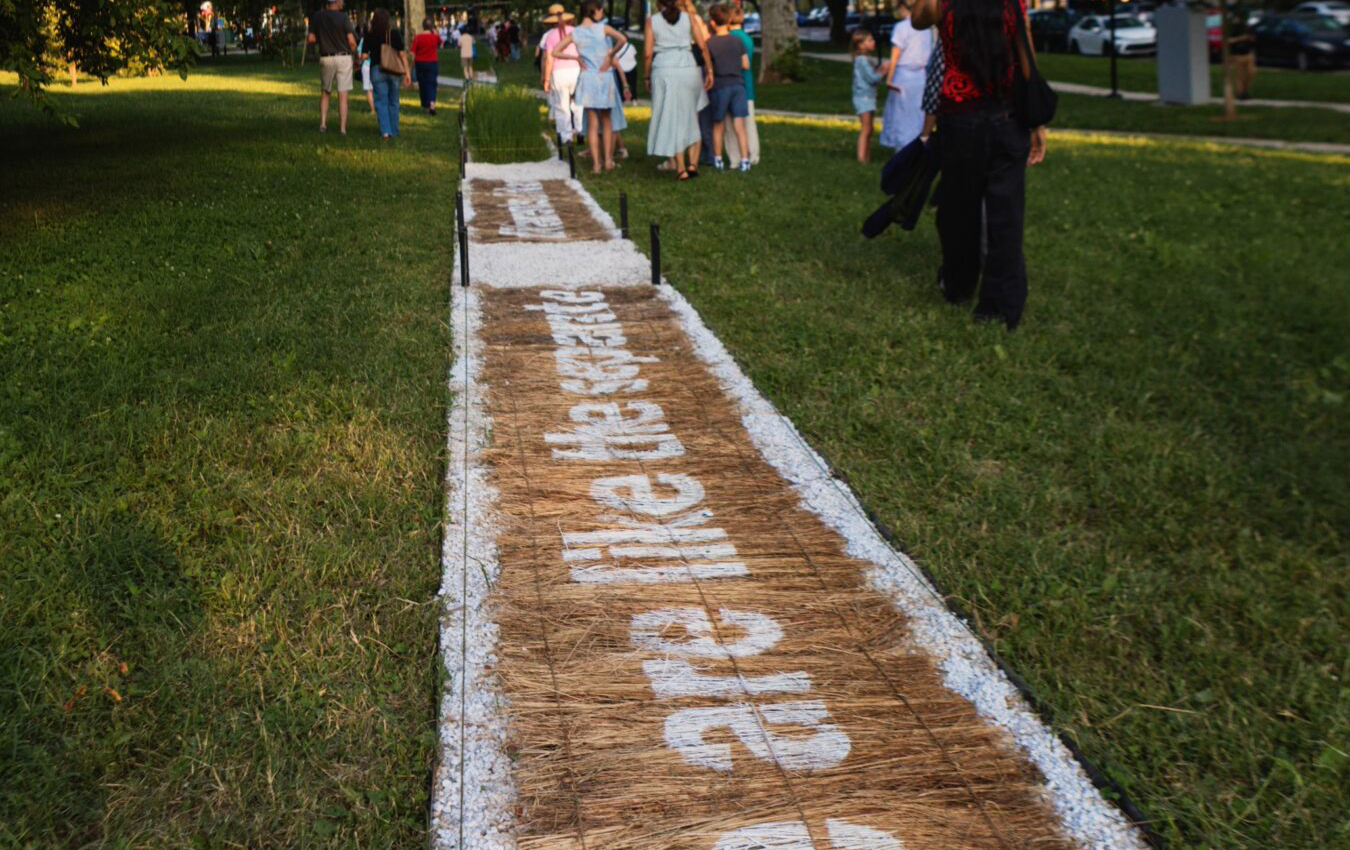
The wall is one end of a larger work. Franklin Thread runs as a linear strip of roughly 114 meters, close to 375 feet, through Maja Park on the Benjamin Franklin Parkway, commissioned by the Association for Public Art for its 2026 Art on the Parkway open call. Along its length a row of living flax grows, and a panel of retted flax carries a spray-painted line Benjamin Franklin wrote in 1747: at present, we are like the separate filaments of flax before thread is formed, without strength because without connection. Richards has organized the piece into three sections, which he uses to set out the stages of flaxcrete production.
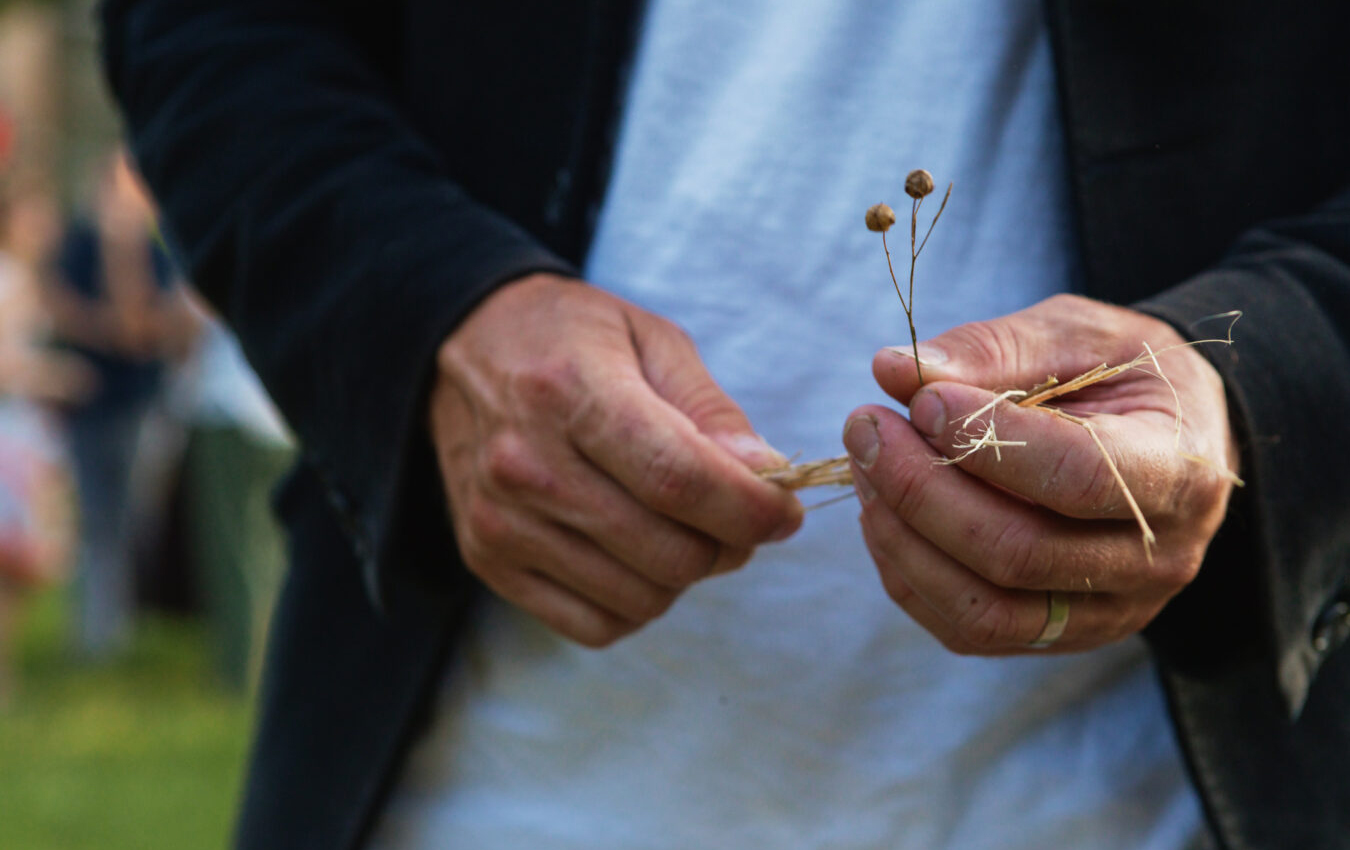
Flaxcrete behaves much as hempcrete does. The shive is mixed with lime, cast, and cured into blocks that weigh far less than concrete of the same size. That lightness comes at a cost the material does not hide: its compression strength is low, so it cannot carry heavy structural load. Flaxcrete is not going to frame a highway overpass, and here it does not need to. The blocks are stacked, not mortared into a bearing wall, aligned on the recycled plastic rods and tied with flax twine, the same plant running through every part of the piece. The shive itself came from Nova Scotia. Flax was once grown across Pennsylvania for the linen trade, but it is no longer farmed here as a commodity crop, so the nearest reliable supply of the plant the work celebrates sat several hundred miles north. A material chosen partly for its local history had to be imported to be built.
What the piece prioritizes is argument over demonstration of structure. As a wall it proves little about how flaxcrete might frame a building, because the material cannot yet do that job. What it does instead is make a case, in public and at scale, for treating flax as a design material rather than only a textile crop, and for reading bio-based building materials as part of a longer local history. The Nova Scotia sourcing is the honest measure of how far that case still has to travel. The plant the work celebrates could not be found where it once grew.