
JR’s La Caverne du Pont Neuf: How Paris’s Oldest Bridge Became a Cave
About
-
Project
La Caverne du Pont Neuf -
Artist
JR (Atelier JR) -
Location
Pont Neuf, Paris, France -
Status
Temporary installation. Public run ended 28 June 2026 -
Materials
Double-walled inflatable structure; ~18,900 m² printed fabric over ~80 canvas arches; ~20,000 m³ air; ~5 tonnes; steel ballast. Engineering and fabrication: Air Toiles Concept, Plougoumelen, Brittany -
Photography
Éléa-Jeanne Schmitter / ©Atelier JR
Links
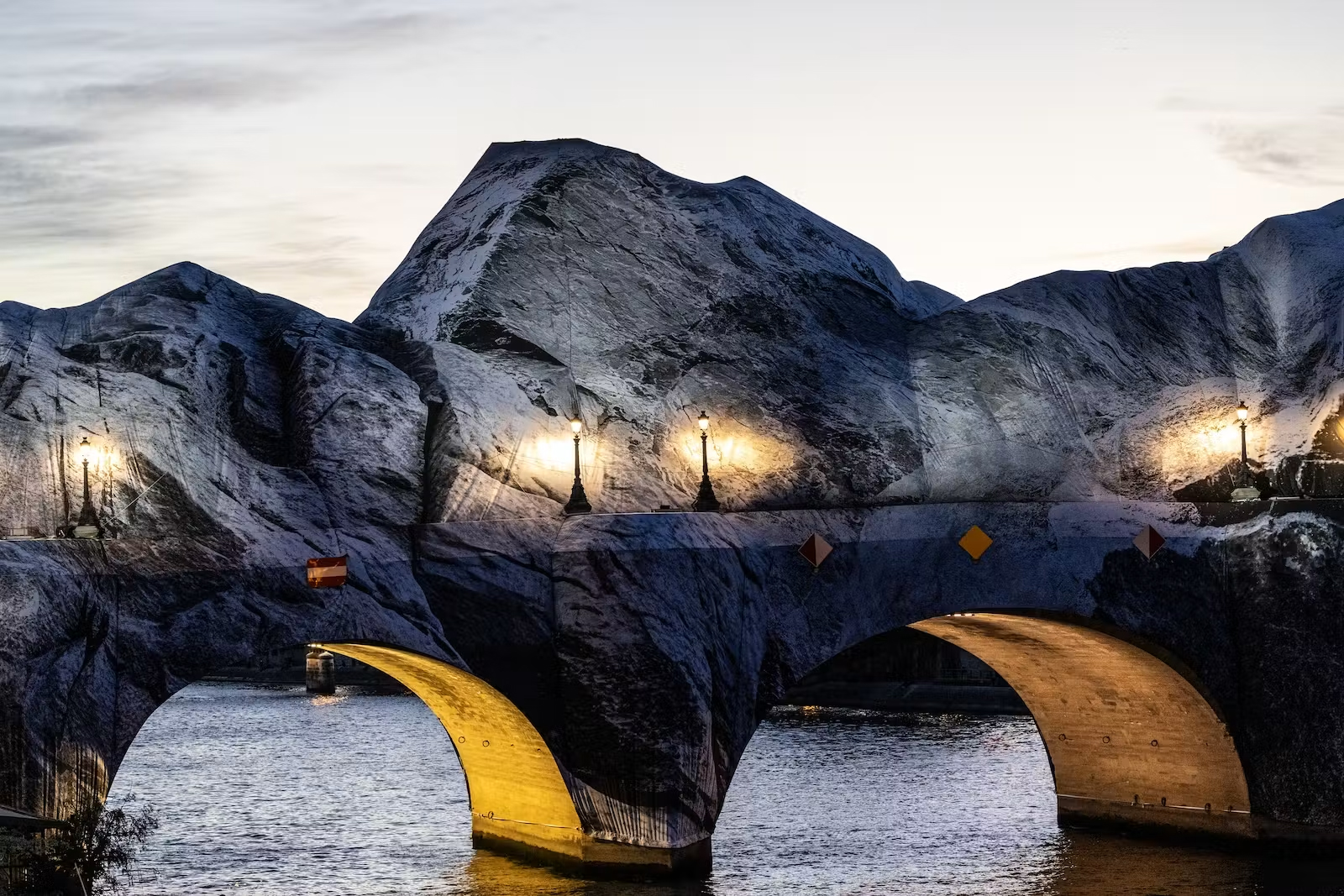
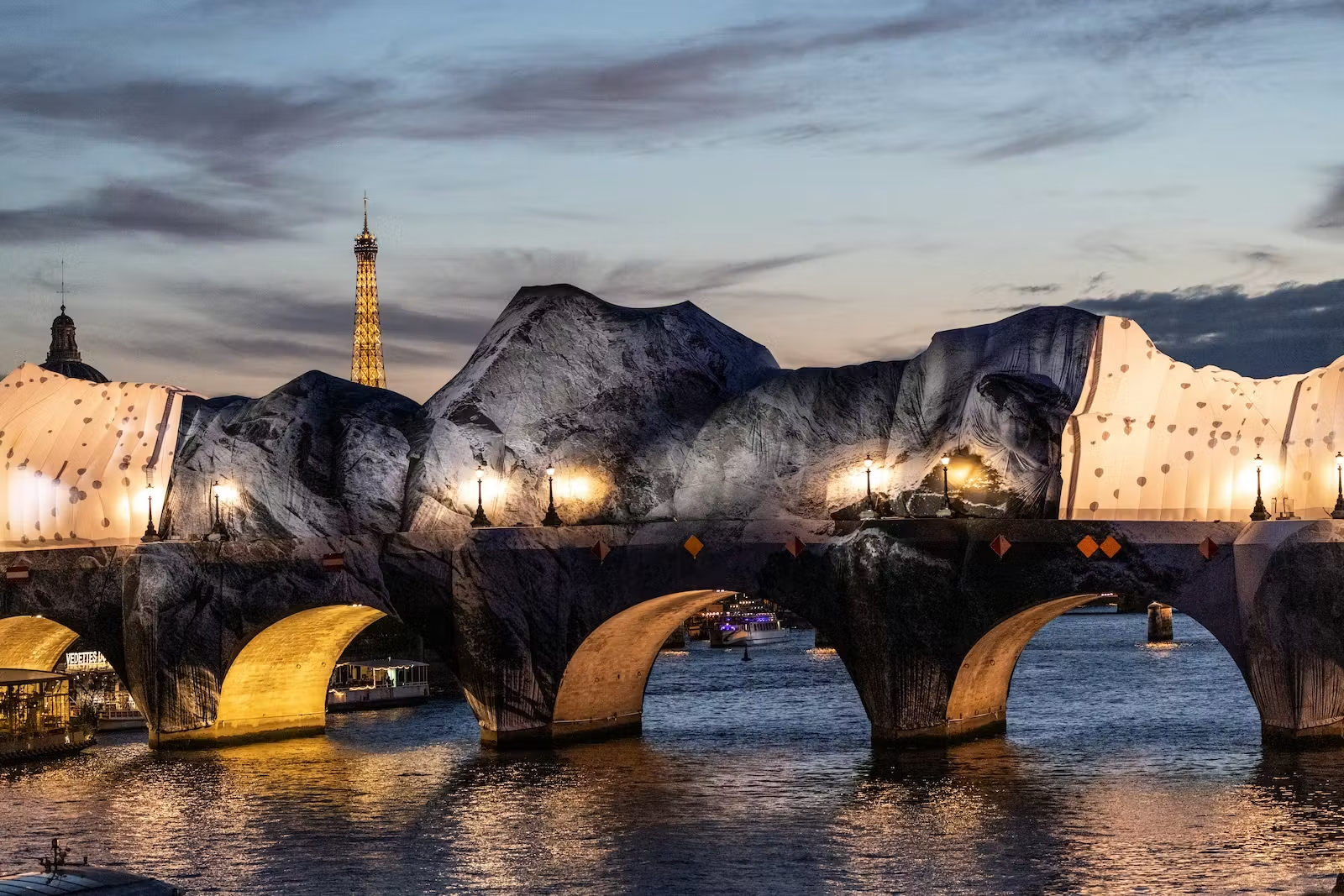
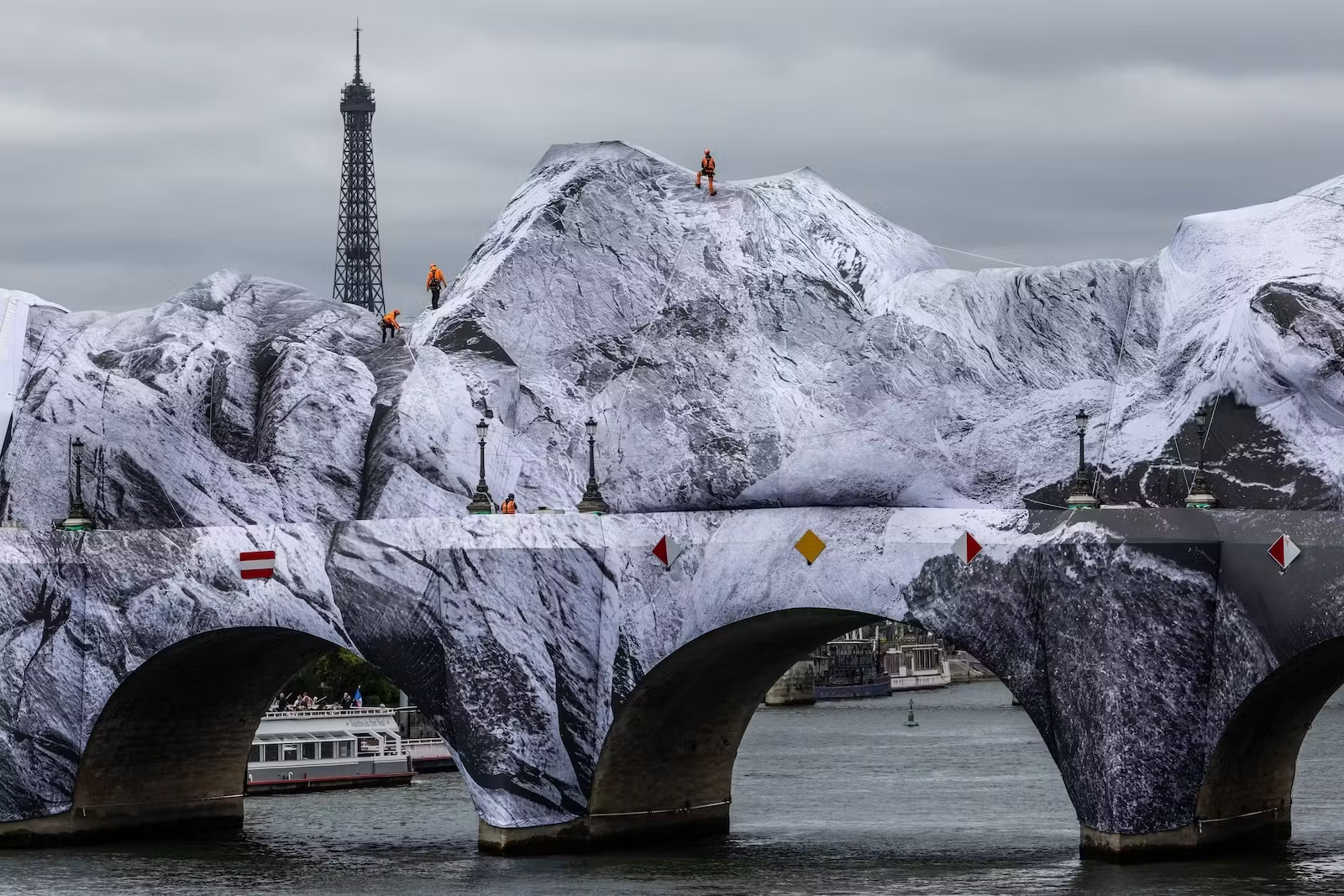
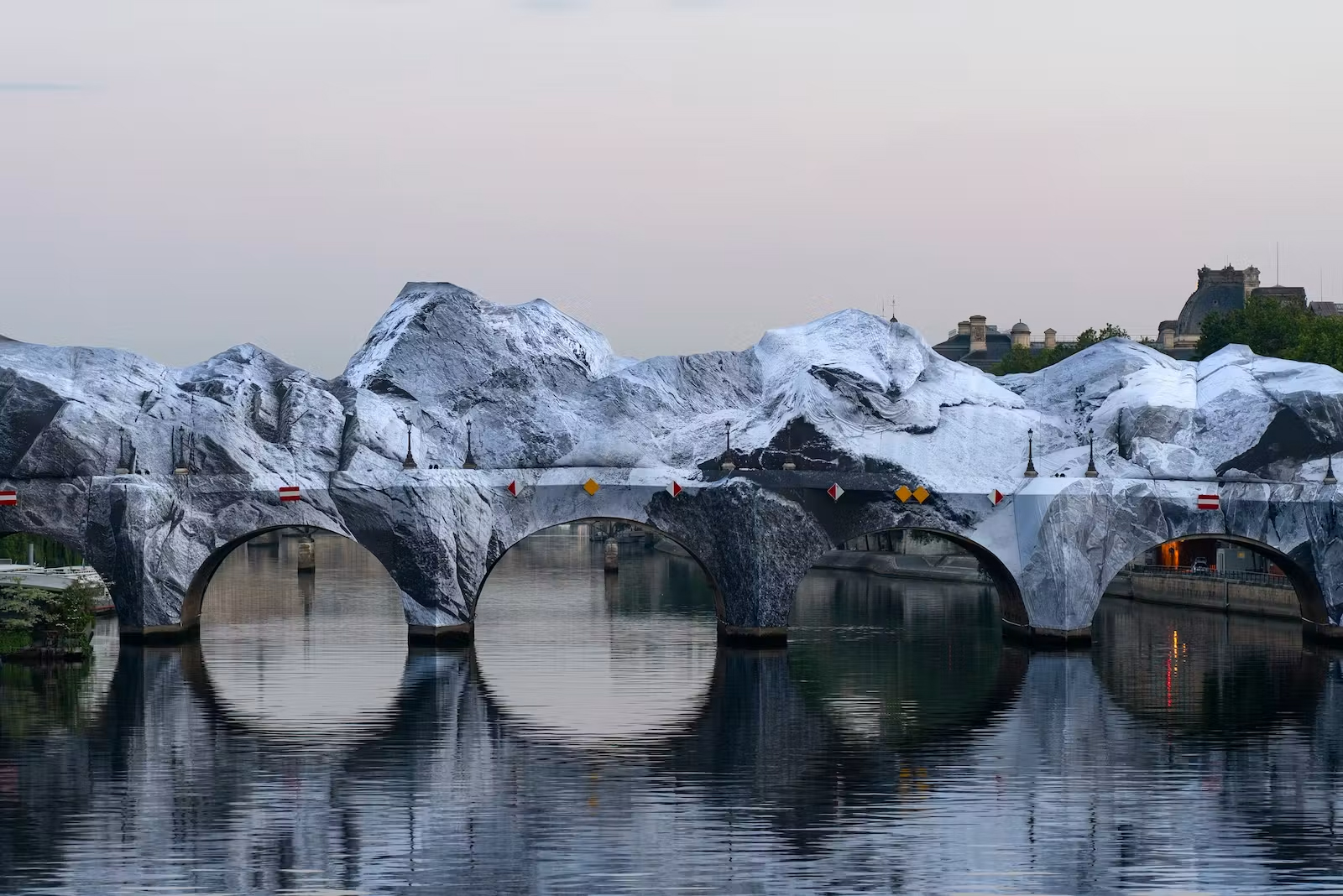
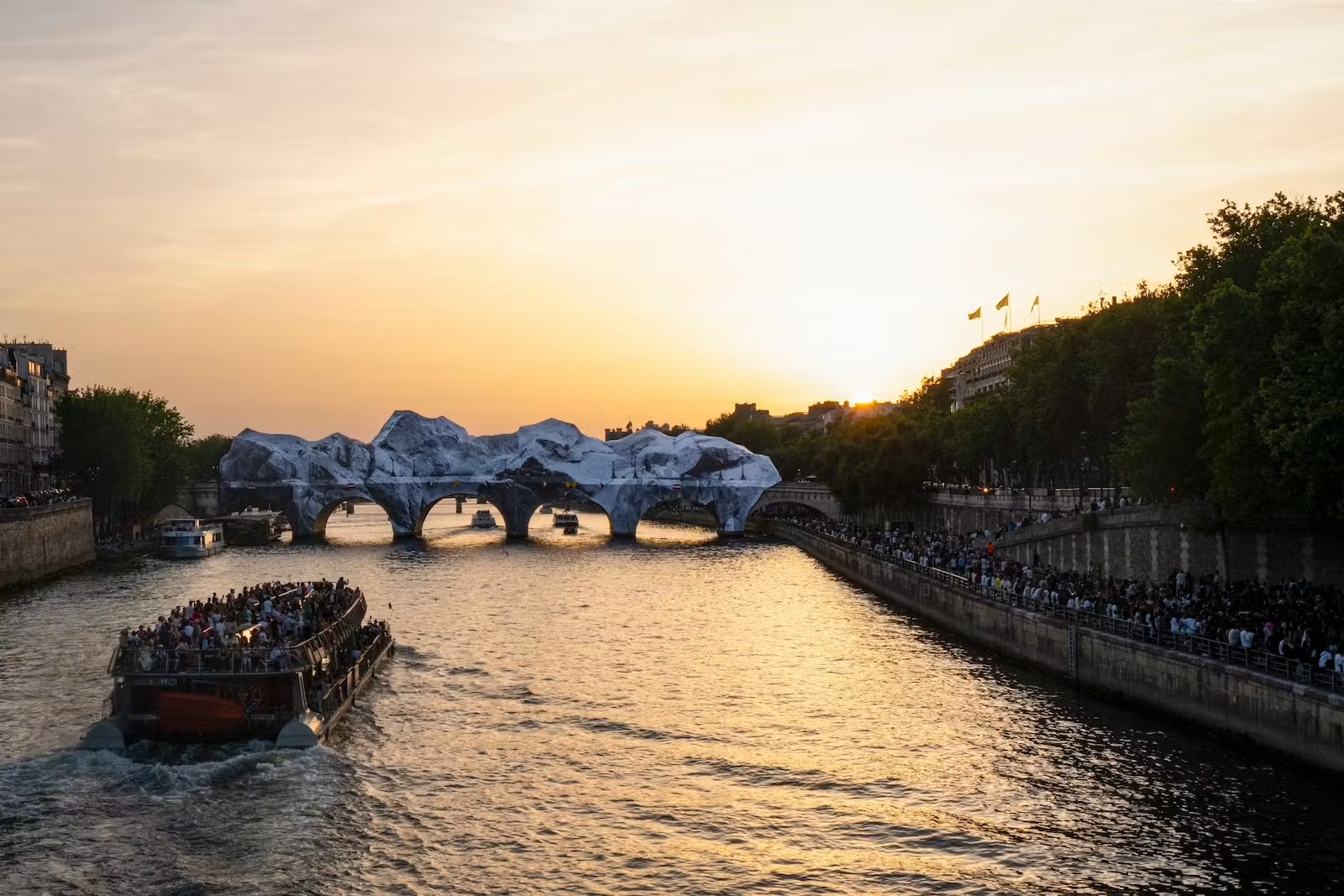
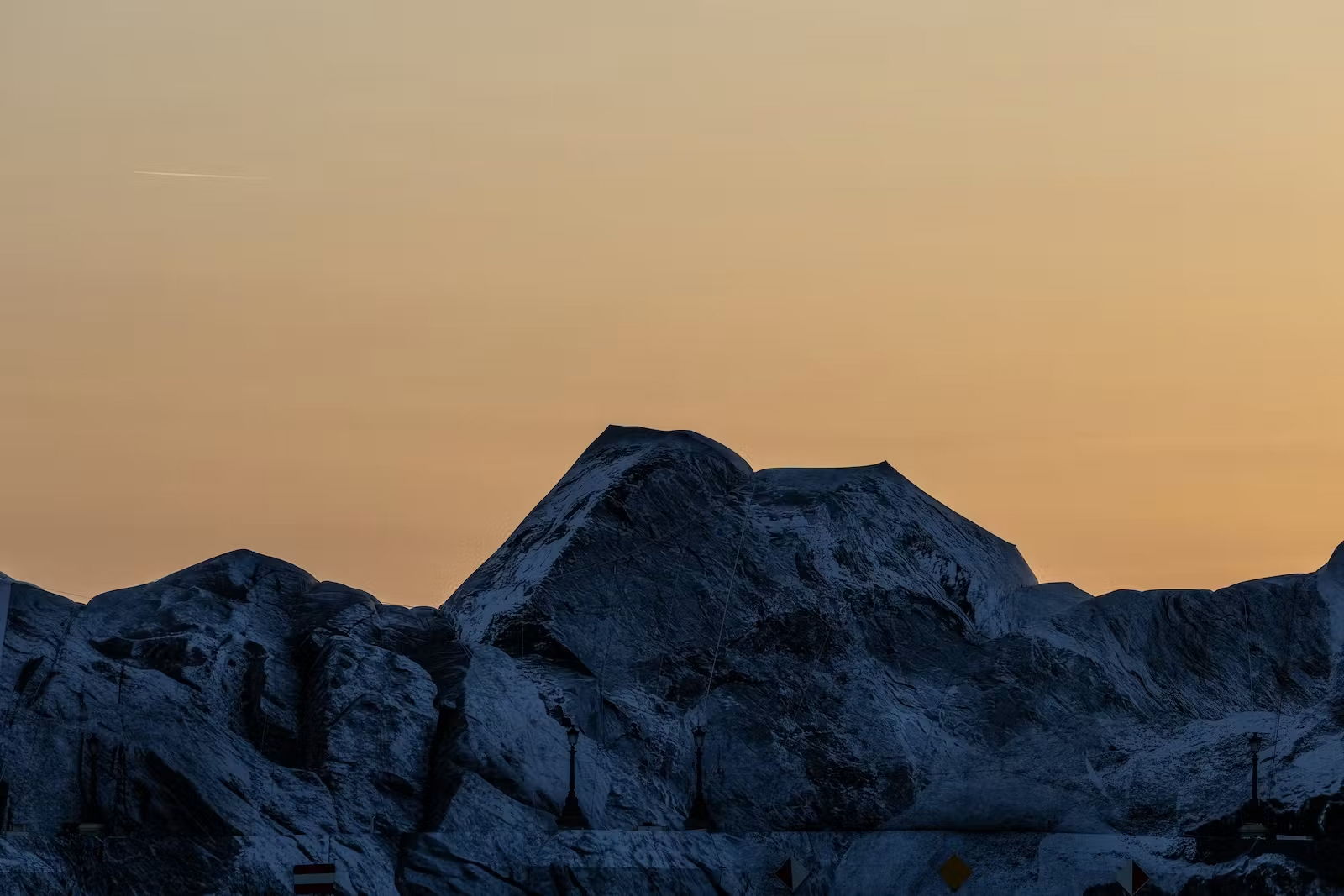
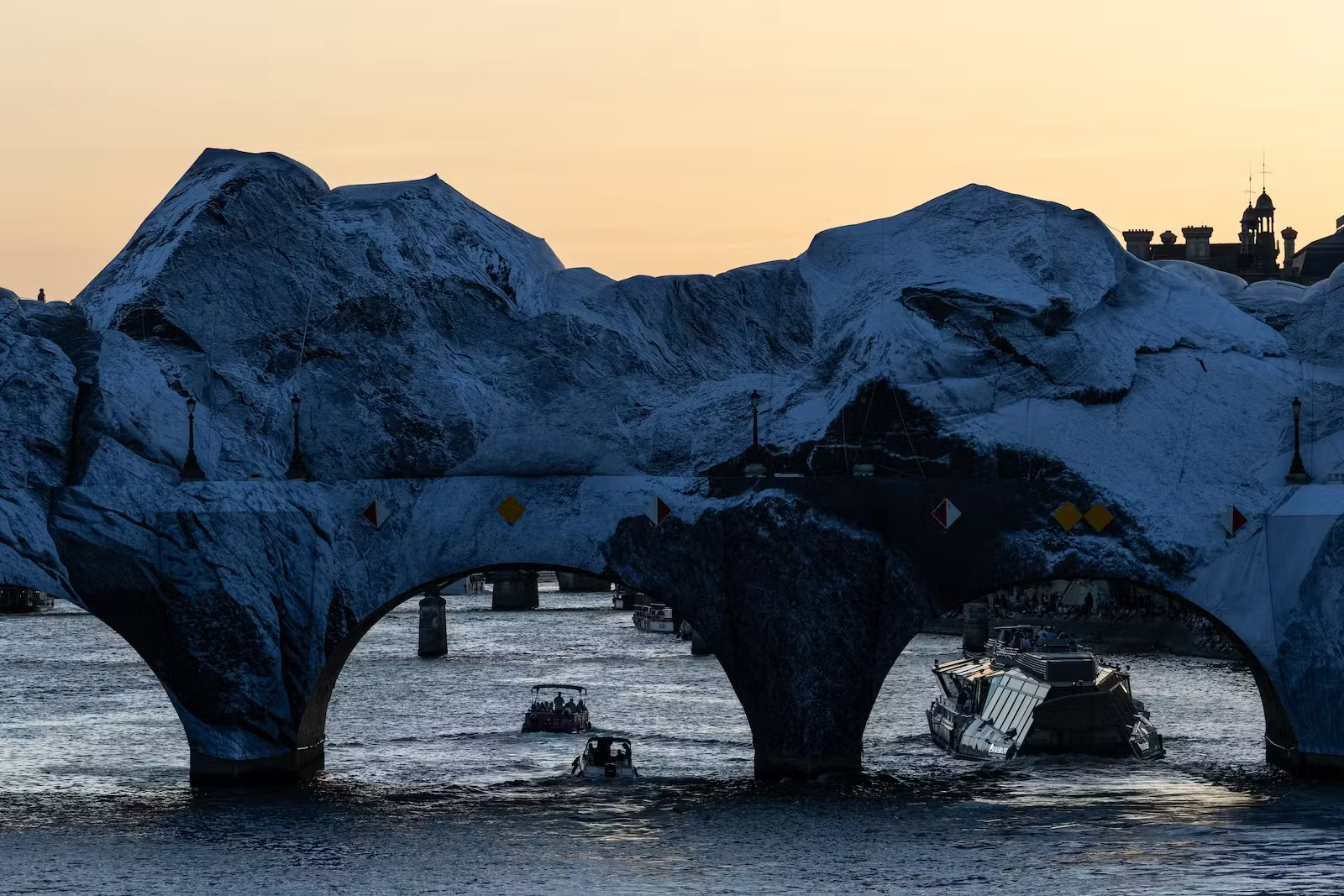
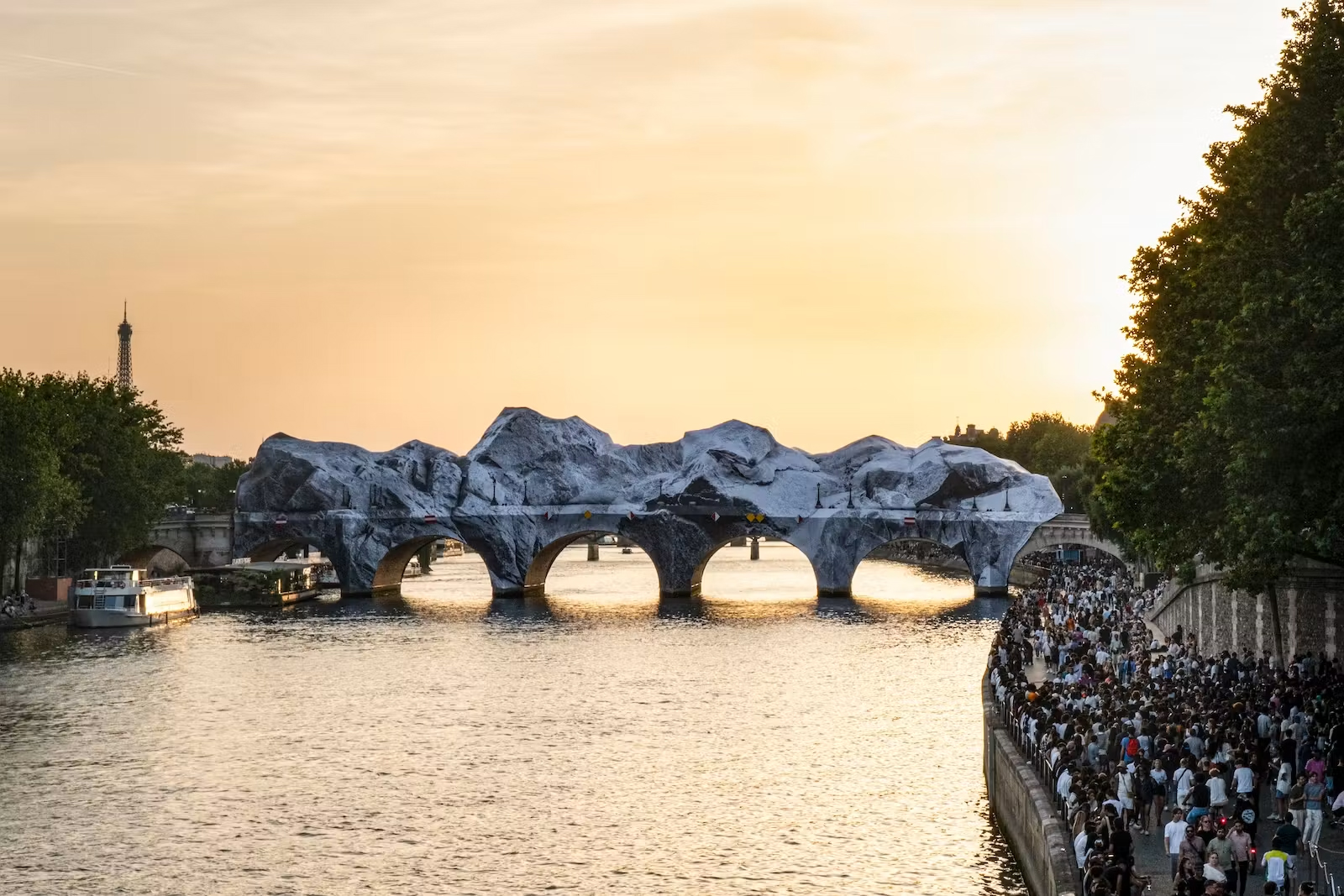
For two weeks in June 2026, JR turned the Pont Neuf into a walkable cave of printed rock. The temporary installation held its monumental form on air alone, and has since been dismantled.
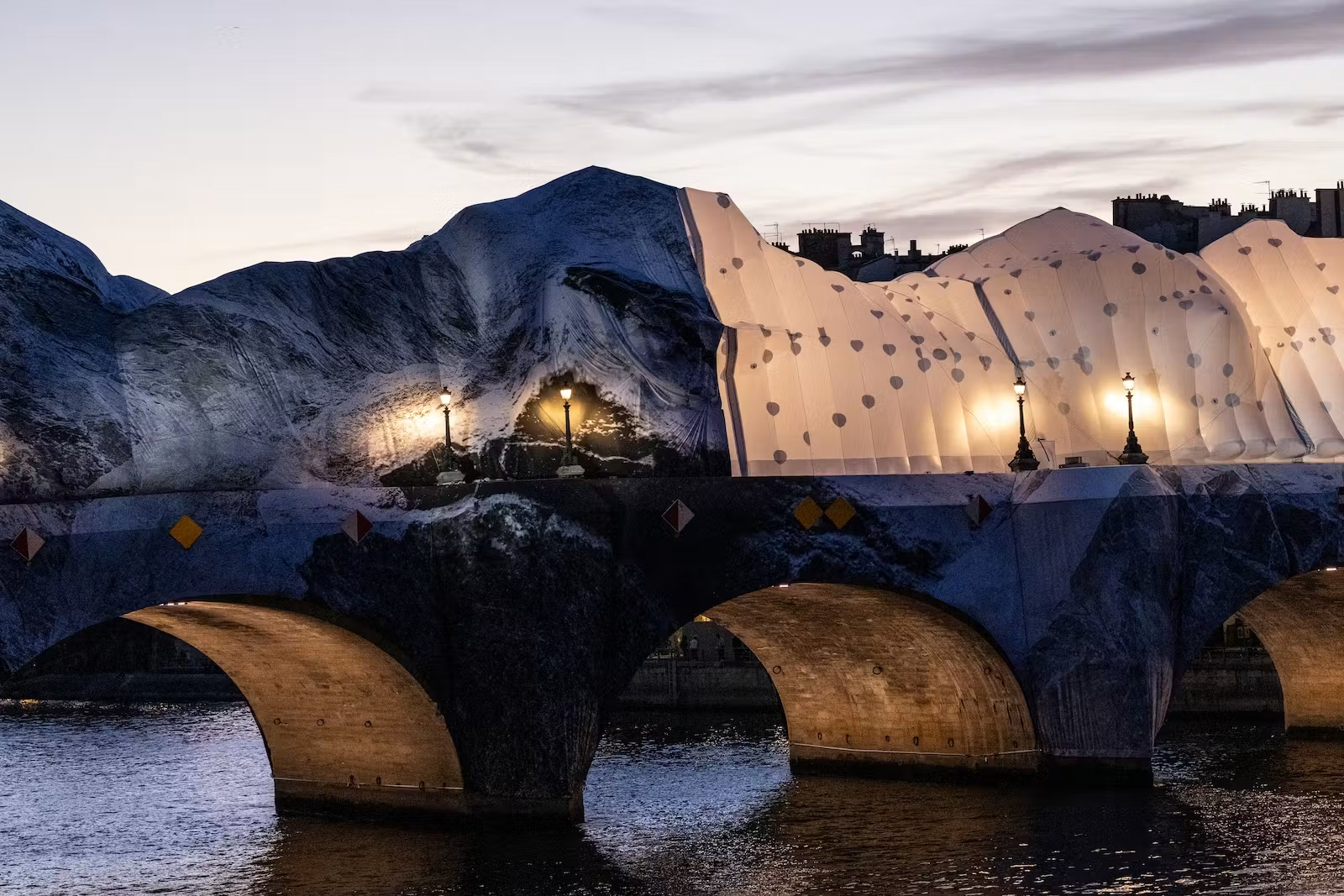
The whole cave stood on nothing heavier than pressurised air. Beneath its printed skin sat 80 canvas arches, kept rigid by a double-walled inflatable system and permanent ventilation, holding roughly 20,000 cubic meters of air across 2,400 square meters of bridge. The finished structure weighed around 5 tons, light enough to sit on the Pont Neuf without foundations or fixings into the 1607 stone.
The Pont Neuf is a protected monument, and nothing could be drilled, bolted or hung from its surface. That constraint shaped everything. [JR’s studio]¹ first considered scaffolding, then settled on an inflatable envelope that could touch the bridge lightly and come off cleanly. Where Christo and Jeanne-Claude concealed the bridge in fabric in 1985, JR chose to appear to break it open. The work was commissioned by the L’Amicale des Ponts de Paris endowment fund, without public money, and its rock is not arbitrary: the pattern draws on the Lutetian limestone quarries that supplied the bridge’s own stone.
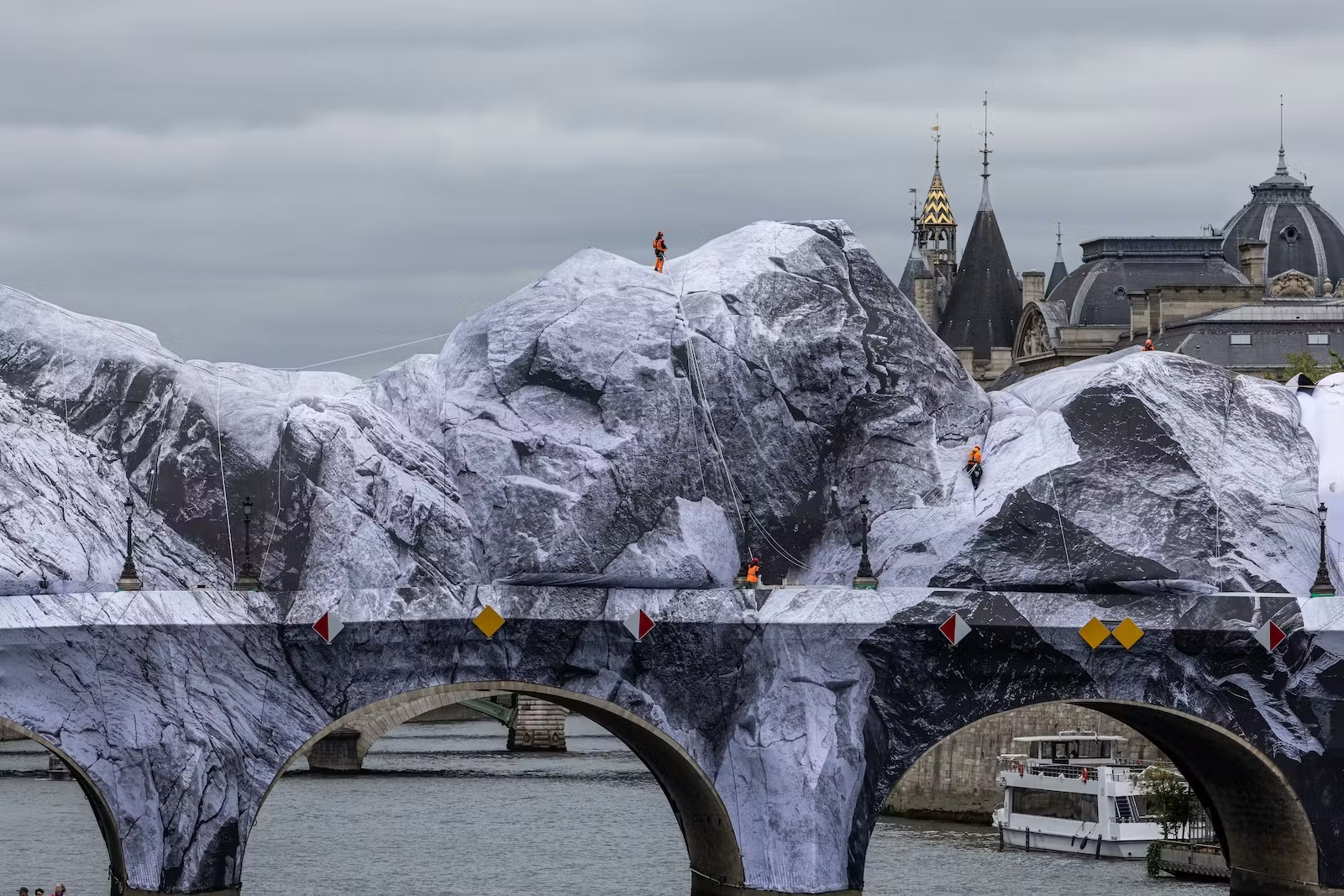
Fabrication went to Air Toiles Concept, an inflatable-structures firm in Plougoumelen, Brittany, with about 30 years in the trade. The teams printed some 18,900 square meters of fabric in white, black and grey, in a pattern that reads as raw stone at distance. Only a person standing on it gives the material away. Installation began in May, and the structure was first inflated around midnight on 20 May. It did not go smoothly. On 2 June, wind and hail tore sections of the envelope while work was still underway, and the opening slipped from 6 June to mid-month. Rather than hide the damage, the team repaired the tears in public view and picked out the new seams in black, leaving them legible in the finished rock. Visitors then walked an interior tunnel from Place du Pont Neuf to the Quai du Louvre.
Air as structure is what made the piece possible on a monument that could not be touched, and it is also what made it fragile. The same lightness that let 5 tons stand in for a mountain left the envelope at the mercy of a single storm. JR’s answer was to keep the repair visible rather than hidden, so the work carried its own near-failure on its surface, a reminder that [temporary and inflatable structures]² live or die on their engineering as much as their image. A cave that read as ancient rock was, for two weeks, one of the most precarious things on the Seine. The organizers say more than 500,000 people came to see it before it came down.